
Home›Blog›Athletic Performance
Athletic Performance
What a Fall Season Does to a Teenage Athlete's Body (And the Two Things That Prevent Most of It)
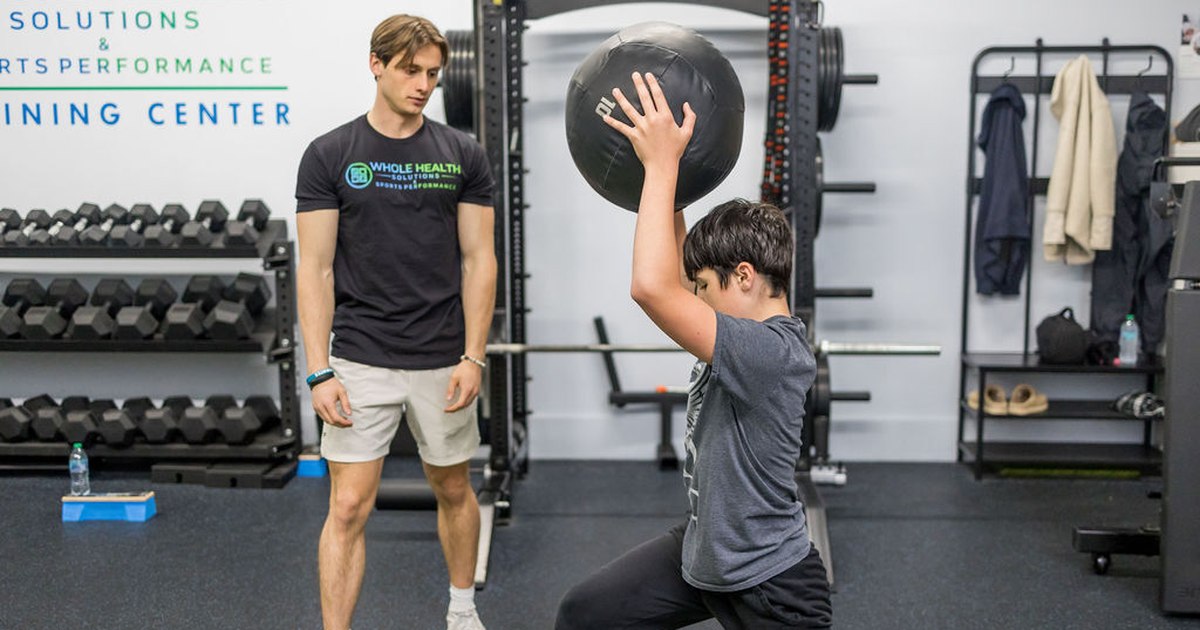
This fall our team has sat down with a lot of parents and their teenage athletes. One conversation keeps repeating itself, almost word for word.
A high school pitcher took a full year off throwing because his elbow hurt. He rested, did everything he was told, and came back. Within a few weeks of ramping back up, the pain was right back where it started.
So why didn't the rest work? Because rest takes away the pain. It does not build the body that has to handle the work when he goes back. I want to walk you through what a fall season actually does to a growing body, and the two things that prevent most of what we see walk through our door in October and November.
What a fall season really looks like from the inside
Think about a typical teenage athlete right now. Practice five or six days a week. Games on the weekend. Maybe a club team on top of the school team.
Now add the fact that this body is still growing. Bones grow first, and the muscles and tendons are always playing catch-up. During a growth spurt a kid can feel tight everywhere and lose some coordination. That is normal. But it means the same practice load lands on a body that is less ready for it than it was a few months ago.
There is another piece most parents never hear about. Kids have growth plates, the areas near the ends of the bones where growing happens. According to the National Institute of Arthritis and Musculoskeletal and Skin Diseases, growth plates are weaker than the ligaments and tendons around them, and they can be injured by repeated stress and overuse, not just by a hard fall. That is why a teenager with "just a sore elbow" or "just knee pain" deserves a real look instead of a shrug.
So by the middle of the season, here is what I usually see:
- Pain that shows up after practice and is gone by morning, until one day it isn't.
- Tight hips and hamstrings from hours of running, cutting, and sitting in class.
- A shoulder or elbow that gets sore earlier in every game.
- Knees that ache going up stairs.
None of these are emergencies on day one. All of them are the body telling you the work is outrunning what it can handle.
Why "just rest it" keeps failing
Backing off is often the right first move. The mistake is treating rest as the whole plan.
While that pitcher was resting for a year, nothing was getting stronger. His arm, his shoulder blade, his hips, and his trunk were all exactly as ready for throwing as they were the day he stopped, or a little less. Then he went right back to the same volume.
This is the pattern behind most of the overuse injuries we treat in young athletes. It is rarely one bad play. It is weeks and months of the sport asking for more than the body was built to give.
Thing one: strength training, all year, including in season
If I could get every parent to do one thing, it would be this. Get your kid strong, and keep them strong during the season, not only in the summer.
A lot of families train hard in the summer, then stop the day practice starts. Practice is not the same thing. Practice repeats the same motions over and over. Strength training builds the parts that protect those motions.
For most young athletes in season, this does not need to be much:
- Two short sessions a week. Thirty to forty minutes is plenty during the season. The goal is to hold on to strength, not to chase personal records before a game.
- Legs and hips first. Squats, lunges, step-ups, single-leg work. Strong hips take stress off knees, ankles and the lower back.
- The back of the body. Hamstrings, glutes, and the muscles around the shoulder blade get neglected in almost every sport and protect almost every joint.
- The trunk. Not endless crunches. Carrying, bracing and rotating with control, so force travels from the legs to the arms without leaking.
- Good coaching. Teenagers can lift safely when someone is watching their form and progressing them sensibly. The risk is in sloppy, unsupervised lifting, not in the weights themselves.
We wrote more about the off-season side of this in our post on off-season training for athletes. The short version: the off-season is where you build it, the season is where you protect it.
Thing two: control the load, not just the pain
The second thing is managing how much the body is asked to do. This is where parents have the most power, because coaches are looking at the team, and you are looking at your kid.
- Count the real total. School practice plus club practice plus private lessons plus pickup games all add up. Write down a normal week. Most families are surprised.
- Protect one full day off a week. Not a lighter practice. A real day with no organized sport.
- Take real breaks from the same sport during the year. Playing one sport twelve months a year gives the same tissues no chance to recover. Playing a different sport or just training for a stretch gives them that break.
- Follow the pitch counts if your kid throws. Pitch Smart, from MLB and USA Baseball, lists pitch limits and rest days by age.
- Treat sleep like training. A growing teenager who sleeps six hours a night will recover like one.
When to stop waiting and get it looked at
Some soreness after a hard week is part of playing sports. But I would want to see your athlete if:
- The same spot hurts for more than a week or two.
- Pain is changing how they run, throw or jump.
- It hurts during the game, not just after.
- They already "rested it" and it came back.
That last one is the big one. If rest did not fix it, more rest will not either. Something in how the body is moving or how much it is being asked to do needs to change. Finding that is what a good evaluation is for. Our sports physical therapy team looks at the whole athlete, from the feet up, not just the spot that hurts. You can see the kinds of problems we help with on our sports injuries page.
The goal is a kid who still loves playing at eighteen
None of this is about pulling kids from their sport. The kids who get strong, rest smart and deal with small problems early are the ones still playing, and still enjoying it, as seniors.
If your athlete is in the middle of a season and something keeps nagging, or you want them stronger before winter sports start, that is exactly what our athletic performance program and our physical therapy team are here for. Book a free discovery call, tell us what you are seeing, and we will give you an honest answer about what your kid needs, even if that answer is "keep doing what you are doing."
Talk to our team
A free consult to tell us what is going on and see if we can help.
Common questions
Should my teenager lift weights during the season?
Yes. Two short, well-coached sessions a week help hold on to strength during the season. The goal is to maintain, not to set records before games.
My athlete rested and the pain came back. Why?
Rest calms pain down but does not make the body stronger. If the same load returns to the same body, the same problem usually returns too. An evaluation looks for what needs to change.
How much time off from sports does a young athlete need?
At minimum, one full day a week with no organized sport, plus real breaks from the same sport during the year. Throwers should also follow age-based pitch limits such as Pitch Smart.
When should a sports injury be checked by a physical therapist?
If the same spot hurts for more than a week or two, if pain changes how they move, if it hurts during play, or if it came back after rest.