
Home›What We Treat›Wrist and Hand Pain
Shoulder, elbow and hand
Wrist and hand pain treatment in Shirley, MA
The short answer
Most wrist and hand pain comes from overuse, like typing, lifting kids or using tools, or from a fall on an outstretched hand. Irritated tendons, a pinched nerve at the wrist and arthritis in the thumb are other common causes. Rest from the aggravating task, better positioning and strength work help most people get back to gripping, typing and lifting comfortably.
On this page
What usually causes wrist and hand pain
Your hands do thousands of small jobs a day, so it does not take much to irritate them. Most wrist and hand pain falls into a few groups.
- Tendon irritation
- Pain along the wrist or thumb with gripping, lifting or twisting. A common one, often called De Quervain's, causes pain on the thumb side of the wrist and is common in new parents.
- Carpal tunnel syndrome
- A squeezed nerve at the wrist that causes tingling or numbness in the thumb and first fingers, often worse at night.
- Thumb and finger arthritis
- An achy, stiff base of the thumb or finger joints that makes opening jars and turning keys harder.
- Sprains and falls
- Landing on an outstretched hand can sprain the wrist ligaments, or sometimes break a bone that needs to be checked.
- Pain that starts higher up
- Sometimes hand tingling or weakness comes from the neck or elbow. We check the whole arm, not just the spot that hurts.
When to get it checked
Get your wrist or hand looked at if pain, tingling or numbness has lasted more than a couple of weeks, wakes you at night, or makes it hard to grip, type or hold things. See a doctor or urgent care right away after a fall if your wrist is very swollen, bruised, bent or deformed, or tender on the thumb side, since some wrist breaks do not show up easily. Go to the emergency room if your hand is cold, pale or blue, if you have sudden weakness or numbness, or if a hand or finger is red, hot and swollen with a fever.
What you can do at home right now
These are safe starting points for most people. They are not a replacement for a proper evaluation.
- Change how you use your hands
- Take short breaks from typing and gripping, use a lighter grip, and switch hands when you can.
- Keep the wrist in a neutral position
- Try to keep your wrist straight when typing, sleeping and using your phone. A wrist splint at night can help with carpal tunnel symptoms.
- Gentle motion and grip work
- Slow wrist circles, finger stretches and squeezing a soft ball in a pain free range help keep the hand moving and strong.
How we treat wrist and hand pain at Whole Health Solutions
Your physical therapist is with you for the whole appointment, start to finish. We check your hand, wrist, elbow, shoulder and neck, look at how you use your hands at work and at home, and build a plan around what you need them to do.
01
Relieve
Hands on care, dry needling when it fits, and simple changes to your workstation, grip and daily tasks so the pain settles down.
02
Rebuild
Strength and control for the hand, wrist and forearm, plus the shoulder and upper back that support them, so everyday tasks feel easy again.
03
Perform
Back to typing, lifting your kids, playing your instrument or sport and working out, with a plan to keep your hands healthy. Our personal trainers can help you keep building once therapy is done.
04
Thrive
Stay with the team that knows you. Check ins, training and a quick tune up whenever something new comes up, so this stays in the past.
Thrive is not a finish line. When life brings something new, the loop starts again with the same team.
How dry needling can help
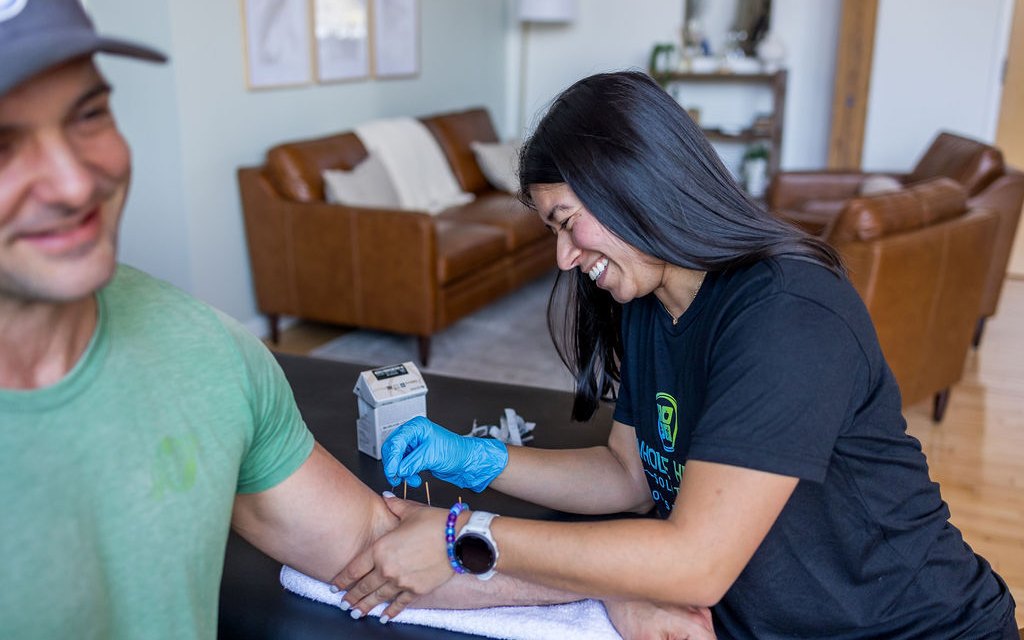
For wrist and hand pain, your physical therapist may use dry needling to speed things up. They will tell you on your first visit if it is a good fit.
Dry needling
A very thin needle placed into a tight, guarded muscle helps it let go, so pain calms down and you can move and strengthen again. Always paired with hands on care and strength work.
Learn about dry needlingLearn from our team
Short, free videos from our clinicians on questions we hear about wrist and hand pain all the time.
Talk to a physical therapist
A free call to tell us what is going on and see if we are the right fit.
Common questions about wrist and hand pain
Can physical therapy help carpal tunnel syndrome?
For many people with mild to moderate carpal tunnel, yes. Nerve gliding, night splinting, and changes to how you use your hands often ease the tingling. If your symptoms are severe or getting worse, we will help you get to the right doctor.
Why does my wrist hurt on the thumb side?
Often it is an irritated tendon, known as De Quervain's, which is common with lifting babies, phone use and gripping. After a fall, pain on the thumb side needs to be checked for a break.
Should I wear a wrist brace?
A brace can help calm things down for a short time, especially at night for carpal tunnel. Wearing one all day for a long time can make the wrist weaker, so it works best with a plan to move and strengthen.
Do I need a referral for wrist and hand pain?
No. You can book directly with us. Most of our clients do use their insurance for reimbursement of our physical therapy services. We go over everything in the discovery meeting.
This page is general information, not a diagnosis. Everyone is different, so the best next step is an evaluation with one of our physical therapists.
Visit us
Serving 22+ nearby towns and beyond
2 Shaker Road, Suite C200, Shirley, MA 01464. Monday to Thursday, 5:00 am to 8:00 pm, Friday, 5:00 am to 3:00 pm, and Saturday, 6:00 am to 1:00 pm.