
Home›What We Treat›Arthritis in the Spine
Back and neck
Physical therapy for arthritis in the spine in Shirley, MA
The short answer
Arthritis in the spine is normal wear on the joints and discs of the neck and back that most of us develop with age. It often shows up as stiffness in the morning or after sitting, and pain that eases once you get moving. Arthritis on an X-ray does not have to mean a life of pain. Regular movement and strength work help most people stay active and comfortable.
On this page
What usually causes arthritis pain in the spine
Almost everyone shows some arthritis in the spine on imaging as they get older, and many people with it have no pain at all. When it does hurt, it usually follows a few patterns.
- Wear on the small spine joints
- The small joints at the back of the spine can get stiff and achy, especially when you lean back, twist or first get out of bed.
- Disc changes
- Discs between the bones lose some height and water with age, which can make the back or neck feel stiff and tired.
- Narrowing around the nerves
- Sometimes called spinal stenosis. It can cause leg heaviness, aching or tingling when you stand or walk for a while, which eases when you sit or lean forward.
- Stiffness from moving less
- When the back hurts, people move less, and a spine that moves less gets stiffer and more sore.
- Weak muscles around the spine
- The core, hip and back muscles support the joints. When they get weaker, the joints take more of the load.
When to get it checked
Get checked if stiffness or pain is keeping you from walking, sleeping, gardening or the things you enjoy, if it has been getting worse over a few weeks, or if you have aching or tingling in your legs or arms when you walk or stand. See a doctor or go to the emergency room right away if you have new numbness in the groin area, trouble controlling your bladder or bowels, weakness in your legs or arms that is getting worse, back pain after a fall, or back pain with a fever or unexplained weight loss.
What you can do at home right now
These are safe starting points for most people. They are not a replacement for a proper evaluation.
- Warm up before you start your day
- A warm shower and a few gentle moves, like knee to chest, pelvic tilts or slow neck turns, can take the edge off morning stiffness.
- Walk a little every day
- Short, regular walks keep the spine moving and nourish the joints and discs. If standing and walking bother your legs, try a stationary bike.
- Change positions often
- Sitting or standing in one spot for too long makes arthritic joints stiffen up. Get up and move every 30 minutes if you can.
How we treat arthritis in the spine at Whole Health Solutions
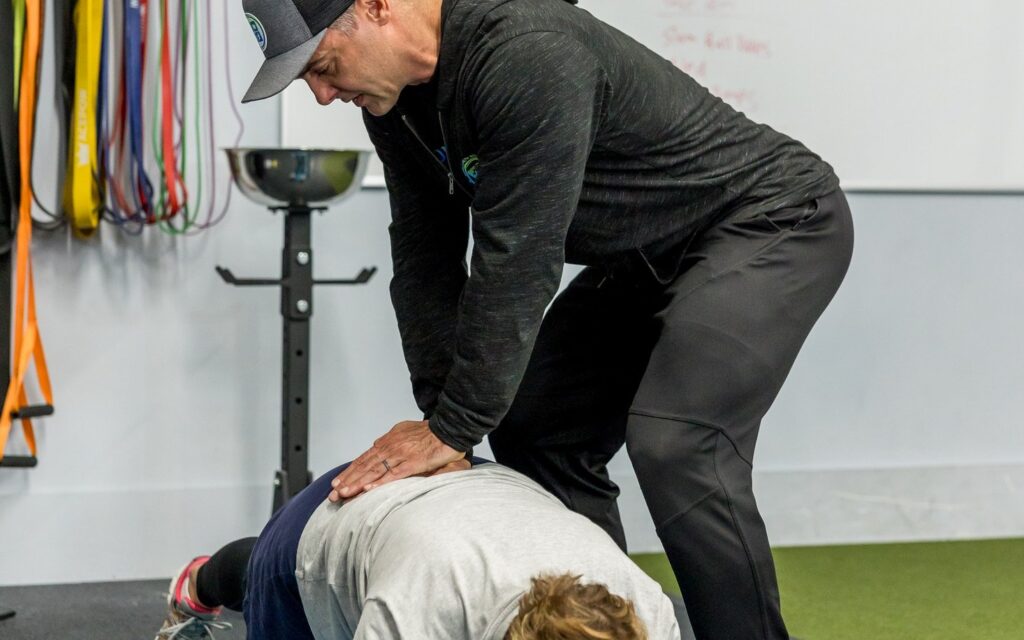
Your physical therapist is with you for the whole appointment, start to finish. We look past the X-ray at how your spine, hips and core actually move, find what is driving your pain, and build a plan that keeps you doing what you love.
01
Relieve
Hands on care to loosen stiff joints and muscles, dry needling when it fits, and gentle movement that eases pain and morning stiffness.
02
Rebuild
Strength for the core, hips and back so the spine is better supported, plus mobility work that makes getting up and moving easier.
03
Perform
Back to walks, golf, gardening, travel and time with the grandkids, with a routine to keep you moving well for years. When you are ready, our personal trainers keep building.
04
Thrive
Stay with the team that knows you. Check ins, training and a quick tune up whenever something new comes up, so this stays in the past.
Thrive is not a finish line. When life brings something new, the loop starts again with the same team.
How dry needling can help
For arthritis in the spine, your physical therapist may use dry needling to speed things up. They will tell you on your first visit if it is a good fit.
Dry needling
A very thin needle placed into a tight, guarded muscle helps it let go, so pain calms down and you can move and strengthen again. Always paired with hands on care and strength work.
Learn about dry needlingCommon exercises for arthritis in the spine
These are a few of the exercises our team often uses for arthritis in the spine. Tap one to watch.
Please read first. These are not right for everyone. If a move brings on sharp pain, numbness or tingling, stop and talk to one of our physical therapists before you keep going.
Learn from our team
Short, free videos from our clinicians on questions we hear about arthritis in the spine all the time.
Read more from our team
Blog posts and newsletter tips from our clinicians that go with arthritis in the spine.
Talk to a physical therapist
A free call to tell us what is going on and see if we are the right fit.
Common questions about arthritis in the spine
Is exercise good for arthritis in the back?
Yes. Movement and strength work are some of the best tools for spine arthritis. The right exercises ease stiffness, support the joints and help you stay active.
Does arthritis in the spine get worse with age?
The changes on an X-ray often increase over time, but pain does not have to. Many people feel better years later than they do today by staying active and strong.
Is walking good for spinal stenosis?
Often, yes, in doses that feel okay. Many people with stenosis find walking easier with a cart or poles, and a stationary bike is a good option too. Your physical therapist can help you find what works.
Do I need a referral for arthritis in the spine?
No. You can book directly with us. Most of our clients do use their insurance for reimbursement of our physical therapy services. We go over everything in the discovery meeting.
This page is general information, not a diagnosis. Everyone is different, so the best next step is an evaluation with one of our physical therapists.
Visit us
Serving 22+ nearby towns and beyond
2 Shaker Road, Suite C200, Shirley, MA 01464. Monday to Thursday, 5:00 am to 8:00 pm, Friday, 5:00 am to 3:00 pm, and Saturday, 6:00 am to 1:00 pm.