
Home›What We Treat›Golf Pain and Injuries
Sports injuries
Golf pain and injuries: understand what is getting in the way
The short answer
Pain during a swing, after practice or while walking the course can have different causes. Where it hurts, when it starts and how it affects everyday activity help guide an assessment. Adjust activity that aggravates symptoms, avoid forcing painful stretches or swings, and seek clinical care for recurring, worsening or limiting pain. A golf movement screen is not a diagnosis.
On this page
Start with the pattern, not a swing fix
Notice when the pain starts: at address, during a swing, after a range session or later that evening. Also notice whether reaching, gripping, sitting, sleeping or walking is affected away from golf.
Pain during golf does not prove that your swing caused an injury. Recent changes in practice, strength work, walking volume, recovery and previous injuries can all be relevant. Symptoms alone do not identify a diagnosis.
- Back or neck
- Turning, bending or carrying a bag may bring on symptoms. Read about back pain and sciatica or neck pain.
- Elbow, wrist or hand
- Gripping and repeated swings can be uncomfortable. Inner elbow pain is often called golfer's elbow, but that label does not explain every painful elbow. See tennis and golfer's elbow and wrist and hand pain.
- Shoulder
- Pain with reaching, lifting or a swing deserves attention, particularly if there is weakness or a recent injury. Explore shoulder pain guidance.
When to get help
Arrange an assessment if pain keeps returning, is worsening, changes how you swing or walk, or interferes with sleep, work or daily activity. New numbness, tingling, weakness or an injury after a fall also warrant medical advice.
Seek emergency care for new loss of bladder or bowel control, numbness around the groin or saddle area, or rapidly worsening leg weakness with back pain. Chest pressure, unusual shortness of breath, fainting or other signs of a medical emergency are not golf soreness: call 911.
Seek prompt medical care after a significant injury, if you cannot bear weight or use the affected limb, or for pain with fever or unexplained illness.
What you can do while deciding your next step
Reduce or pause the activity that clearly aggravates symptoms instead of repeatedly testing the painful swing. Keep comfortable everyday movement if tolerated. Do not push through worsening pain, numbness or weakness.
Avoid changing your swing, adding aggressive stretching and starting a heavy exercise routine all at once. A short record of practice, rounds, symptoms and what you have tried can make an assessment more useful.
- Adjust the demand
- Fewer swings, a shorter session or less carrying may be more manageable. If even light activity worsens symptoms, stop and seek advice.
- Keep changes manageable
- Give yourself time to see how you respond. There is no single rest period, stretch or exercise list that fits every golf injury.
- Know what to bring
- Tell your clinician about previous injuries, relevant medical care and the golf activities you want to return to.
How rehabilitation can support a return to golf
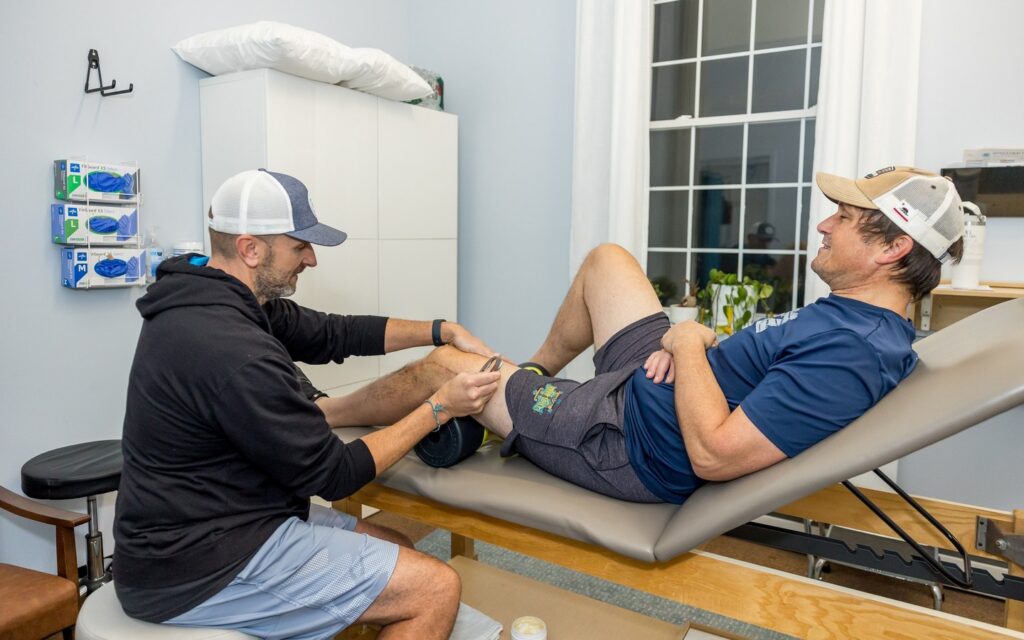
A physical therapy evaluation considers your symptoms, medical history, movement, strength and goals. Treatment should follow the findings, with referral to another medical professional when appropriate. Your golf professional remains the person for golf technique instruction.
01
Relieve
Understand the symptoms and adjust aggravating activity while beginning appropriate care.
02
Rebuild
Develop the strength, mobility and control your assessment identifies.
03
Perform
Progress practice, walking and rounds in manageable steps, guided by your response.
04
Thrive
Keep a realistic strength and activity routine, and reassess symptoms if they return or change.
Thrive is not a finish line. When you are ready for your next goal, the same team that got you here is ready too.
Where TPI fits, and where it does not
TPI stands for Titleist Performance Institute. Its Level 1 education includes a physical movement screen. A screen can help explore mobility, balance and control, but does not diagnose pain, predict an individual injury or guarantee that you will avoid injury.
Pain or injury calls for clinical assessment rather than simply trying to pass a movement screen. TPI-informed physical therapy is medical rehabilitation; golf-performance TPI is a separate, nonmedical service. Neither is a substitute for golf lessons.
Build back toward the golf you actually play
Returning to nine holes, walking a full course and playing several rounds a week ask different things of your body. A return plan should reflect your starting point, symptoms and priorities, not a promised number of weeks.
Increase practice and playing volume gradually rather than adding long range sessions, heavier gym work and full rounds together. Use your response during activity and afterward to discuss the next step with your clinician. A warm-up is not permission to push through pain.
Explore a specific golf question
- Back painGolf back pain in the off-seasonUnderstand recurring back symptoms and build a manageable plan.Read the guide
- Movement screeningWhat can a golf movement screen tell you?Learn what a screen can show and when pain needs clinical assessment.Read the guide
- Season preparationPreparing your body for golf seasonPlan a gradual increase in practice, walking and rounds.Read the guide
★★★★★
"Thanks to my personal trainer, Courtney, and the entire WHS team, I've been able to return to the active lifestyle I enjoy. I'm back to playing plenty of golf, coaching and playing sports with my kids, hiking, and enjoying many other outdoor activities that I wasn't sure I'd be able to do comfortably again."
Talk about pain that is affecting your golf
A free consult to tell us what is going on and see if we can help.
Common questions about golf pain and injuries
Is every painful golf elbow golfer's elbow?
No. The location and pattern of pain help guide an assessment, but a label or an online symptom list cannot establish a diagnosis. Seek advice if pain persists, worsens or limits use of your arm.
Should I keep playing if golf hurts?
That depends on your symptoms and the cause. Reduce or stop activity that aggravates pain and seek advice for recurring or limiting symptoms. Do not play through worsening pain, numbness, weakness or the warning signs listed above.
Will a TPI screen tell me what injury I have?
No. A movement screen explores physical movement. It does not diagnose an injury or replace a clinical evaluation for pain.
Do I need to wait for the off-season to get help?
No. Recurring or limiting symptoms deserve attention during the season too. The off-season may offer room to work on a plan, but it is not a deadline or a guarantee of recovery.
Can physical therapy guarantee an injury-free golf season?
No. Assessment and rehabilitation can address symptoms and factors that may be modifiable, but results and recovery time vary. No exercise routine or movement screen can guarantee prevention.
This page is general information, not a diagnosis. Everyone is different, so the best next step is an evaluation with one of our physical therapists.
Visit us
Serving 22+ nearby towns and beyond
2 Shaker Road, Suite C200, Shirley, MA 01464. Monday to Thursday, 5:00 am to 8:00 pm, Friday, 5:00 am to 3:00 pm, and Saturday, 6:00 am to 1:00 pm.