
Physical Therapy
Shockwave Therapy for Plantar Fasciitis: What It Is, What It Feels Like, and Who It Helps
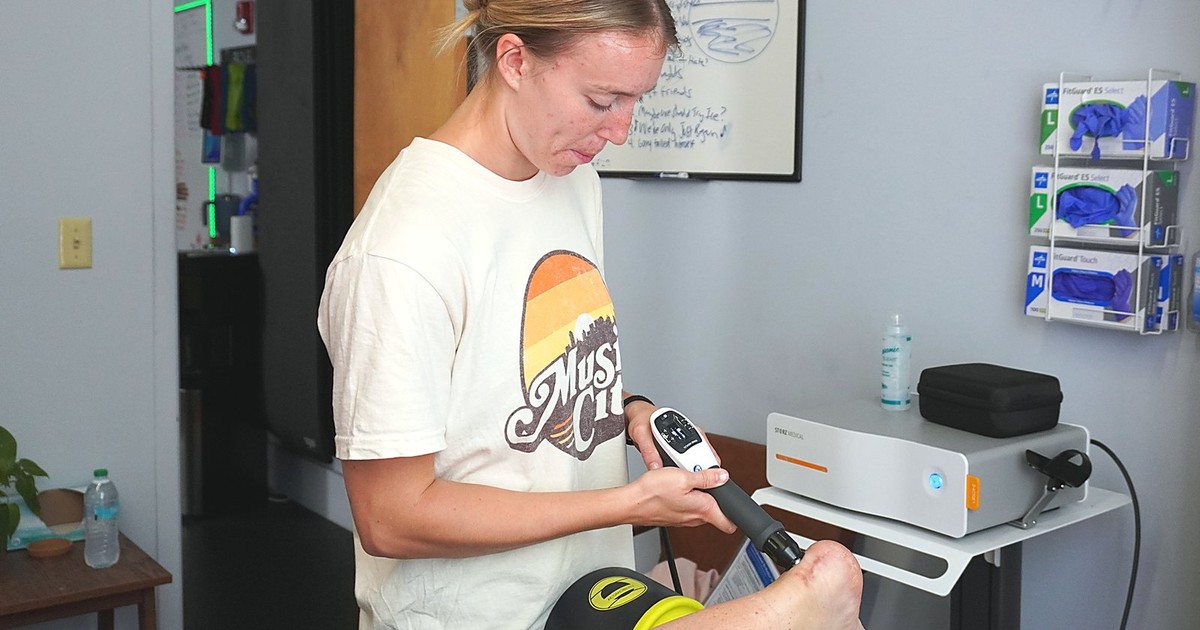
Every few weeks someone sits down across from me, slides off a shoe, and says some version of the same thing: "I've done everything for this heel, and it still hurts the second I get out of bed."
They have stretched. They have iced. They have rolled a frozen water bottle under their foot while watching TV. They bought the expensive shoes and the inserts. Some of them have had a shot. And the first steps in the morning still feel like stepping on a nail.
That is usually when they ask about shockwave therapy. It is also one of the most searched questions we see from people around Shirley, so here is the honest version: what it is, what it feels like, who it helps, and who it doesn't.
First, what is actually going on in your heel
Plantar fasciitis is irritation of the thick band of tissue that runs along the bottom of your foot, from your heel to your toes. It takes a beating every time you stand, walk, or run. When it gets overloaded faster than it can recover, it gets sore, usually right where it attaches to the heel.
The classic sign is pain with your first steps in the morning or after you have been sitting a while. It often loosens up as you move, then comes back after a long day on your feet. The American Academy of Orthopaedic Surgeons has a good plain-English overview if you want the medical background.
Here is the part most people don't hear: a lot of plantar fasciitis gets better with the basics. But some cases get stuck. The tissue stops healing, the pain hangs around for months, and rest alone will not restart it. That stuck group is who shockwave is for.
What shockwave therapy is
Shockwave therapy uses focused sound waves, delivered through a small handpiece, to the exact spot that hurts. The idea is simple. Tissue that has stopped healing gets a strong mechanical signal that kickstarts the healing process again.
At our clinic, we use the Storz Medical DEACTOR 100 Ultra, a focused shockwave device. You may also see the name SoftWave in ads around here. SoftWave is a brand of shockwave device. The brand matters a lot less than what happens around it, which I will get to in a minute.
Shockwave is not new or fringe. The AAOS lists extracorporeal shockwave therapy as an option for heel pain that has not improved with other nonsurgical care. It is not a first step for a heel that started hurting last week. It is a tool for the heel that has been hurting since summer.
What a session feels like
People are usually more nervous about this than they need to be, so here is exactly what happens.
- Your physical therapist finds the exact tissue that is causing your pain. If shockwave is not a good fit for your problem, we tell you, and we use what is.
- A little gel goes on your heel, and the handpiece goes on the sore spot.
- You feel strong, fast tapping pulses. On the tender spot it can be uncomfortable. We adjust the intensity to what you can handle, and it is never a grit-your-teeth situation.
- The shockwave itself takes only a few minutes of your visit.
- Then we get to work on the part that keeps the pain from coming back.
Most people walk out normally and go about their day.
Why shockwave alone is not the answer
This is the part I care about most. Shockwave can restart healing. It does not make your foot, calf, and hip stronger. And weak, tight, overloaded tissue is usually how you got here in the first place.
So we never use shockwave on its own. It is one piece of your shockwave therapy plan, paired with the work that makes the results last:
- Calf and foot strength. Slow, heavy calf raises and foot strength work help the tissue handle load again.
- Load management. Not "stop everything." Just a smarter plan for walking, running, and standing while things heal.
- The rest of the chain. Ankle stiffness, hip weakness, and how you move all change how much stress lands on your heel.
- Hands-on care when it helps, including dry needling for tight, overworked calves.
One of our clients put it well in her Google review: "I had tried everything for my plantar fasciitis, but it just kept coming back. The combination of physical therapy and shock wave therapy that I have received at Whole Health has been outstanding." That combination is the whole point.
Who shockwave helps, and who should skip it
Shockwave tends to make the most sense when:
- Your heel pain has been around for a few months or longer.
- You have already tried the basics, and it keeps coming back.
- You want to stay active instead of shutting everything down.
It is also useful beyond the heel, for stubborn Achilles pain, tennis elbow, and tendon pain around the knee, shoulder, and hip.
It is not for everyone. If your pain is brand new, we usually start with the basics first. There are also medical reasons we would not use it, like certain blood clotting problems, pregnancy, or a tumor or infection in the area. That is exactly why your physical therapist evaluates you first instead of just pointing a device at your foot.
What you can do this week
Whether you ever try shockwave or not, these help most stuck heels:
- Don't go barefoot on hard floors first thing in the morning. Keep supportive shoes or sandals next to the bed.
- Start calf raises. Slow up, slower down, a few sets a day, as long as the pain stays mild and settles by the next morning.
- Change one thing about your load. If you run daily, add a rest day. If you stand all day, take short sitting breaks.
- Keep track of your first steps. Morning pain is the best scoreboard. If it is not improving after a few weeks of honest effort, get it looked at.
The National Library of Medicine notes that most people with plantar fasciitis improve with conservative care, so don't panic. But "give it more time" is not a plan when it has already been months.
If your heel has outlasted your patience
If you are tired of planning your mornings around your heel, come talk to us. Learn more about our approach to plantar fasciitis and physical therapy in Shirley, or book a free consult. We will tell you honestly whether shockwave makes sense for you and what the full plan would look like. Most of our clients do use their insurance for reimbursement of our physical therapy services. We go over everything in the discovery meeting.
Talk to our team
A free consult to tell us what is going on and see if we can help.
Common questions
Does shockwave therapy for plantar fasciitis hurt?
You feel strong tapping pulses, and it can be uncomfortable on the sore spot. Your physical therapist adjusts the intensity to what you can tolerate.
Is SoftWave the same as shockwave therapy?
SoftWave is a brand of shockwave device. We use the Storz Medical DEACTOR 100 Ultra, a focused shockwave device, and always pair it with strength work so results last.
Do I need a referral for shockwave therapy in Shirley, MA?
No. In Massachusetts you can see a physical therapist directly. We evaluate you first and tell you honestly whether shockwave makes sense.